How to Tell When Your Sawmill Blade Needs Sharpening
A sharp blade makes all the difference. It cuts cleaner, runs smoother, and helps you get the most out of your sawmill. But how do you know when your sawmill blade needs sharpening? Here are the key signs to watch for, so you can keep your mill running right and your lumber looking its best.
A sharp bandsaw blade makes a big difference in how your sawmill performs. When a blade starts getting dull, you may notice it taking longer to get through a log, wandering in the cut, or leaving a rougher board than usual.
The problem is that a blade doesn’t always look obviously dull.
If you run a portable or stationary bandsaw mill, learning to recognize the early warning signs can help you avoid poor lumber quality, unnecessary strain on your mill, and damage to your blades.
Here are some of the most common signs that it it may be time that your sawmill blade needs sharpening.
1. Your Blade Is Cutting Slower Than Normal
One of the first things you may notice is that you’re having to slow down your feed rate.
A sharp blade should move through the log smoothly without needing to be forced.
If a cut that normally moves along easily suddenly requires more patience or you’re constantly adjusting your feed speed, the teeth may no longer be cutting efficiently.
Don’t assume you need more pressure.
Pushing a dull blade harder can create additional heat and stress on the blade.
2. The Blade Starts Wandering
A blade that won’t stay straight in the cut is another warning sign.
You might notice:
- Boards that are thicker on one end than the other
- A wavy surface
- The blade diving or rising during the cut
- Difficulty maintaining a consistent board thickness
Blade wandering can have several causes, including blade tension, guide alignment, tooth set, feed speed, or the type of wood you’re sawing.
But a dull or improperly set blade is certainly one of the first things worth checking.
3. Your Lumber Has a Rougher Finish
Take a look at the boards coming off your mill.
If they suddenly have noticeably more saw marks, rough areas, or an uneven surface, your blade may need attention.
A properly sharpened and set sawmill blade should produce a relatively smooth and consistent cut.
The surface doesn’t need to look like it came out of a planer, but a dramatic change in cut quality is a good indication that something has changed.
Often, the blade is the culprit.

Pro Tip:
Keep an eye on your cut quality. If your boards start looking noticeably rougher, it’s usually a sign your blade needs attention.
4. You’re Getting More Sawdust Instead of Chips
Pay attention to what’s coming out of the cut.
A properly cutting sawmill blade should remove wood efficiently. As the blade becomes dull, it may begin grinding or rubbing more than cutting.
That can change the appearance of the sawdust.
If you’re suddenly seeing finer dust than usual instead of the type of material you normally see from your mil, inspect the blade.
It’s a small clue that can tell you quite a bit about how well the teeth are cutting.
5. The Blade is Getting Hot
Some heat during sawing is normal.
Excessive heat isn’t.
A dull blade has to work harder to travel through the wood, creating additional friction. You may notice that the blade is unusually hot when it comes off the mill.
Heat can also contribute to blade stretching and other problems, so this isn’t something you want to ignore.
If your blade suddenly seem to be running hotter than usual, check your blade condition along with your mill setup and lubrication.
6. You’re Having to Push the Mill Harder
Your sawmill shouldn’t feel like it’s fighting the log on every cut.
When everything is working properly, the blade should be doing the majority of the work.
If you’ve started thinking:
“I sure have to push this thing harder than I used to.”
There’s a good chance something needs attention.
Before making major adjustments to the mill, take a good look at the blade.
Sometimes the simplest answer is the right one.
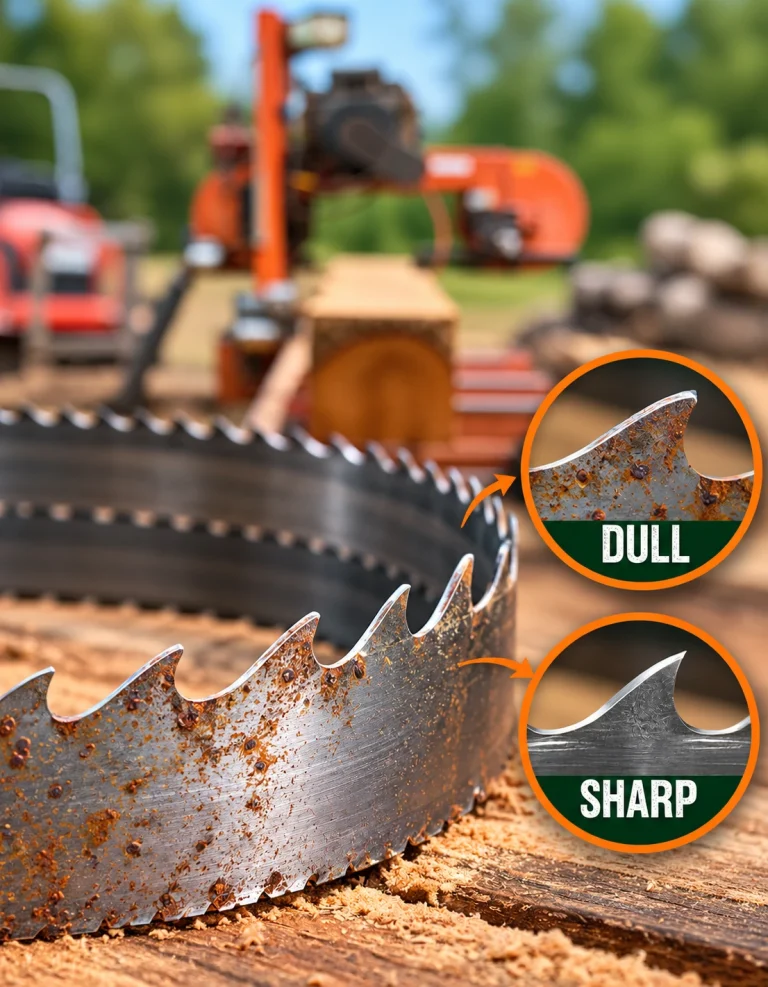
7. The Teeth Look Rounded or Damaged
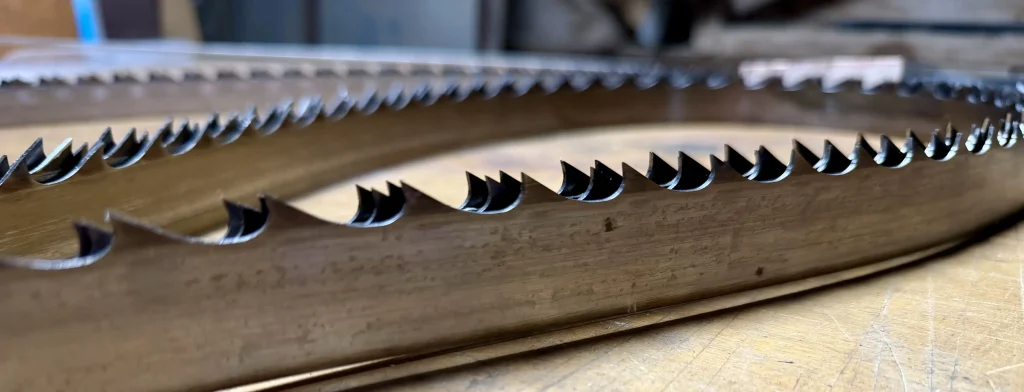
You can also visually inspect the teeth.
Look closely a the cutting tips.
Sharp teeth should have a defined cutting edge. With use, those edges gradually begin to round over.
You may also find:
- Chipped teeth
- Damaged teeth
- Uneven tooth set
- Heavy pitch or buildup
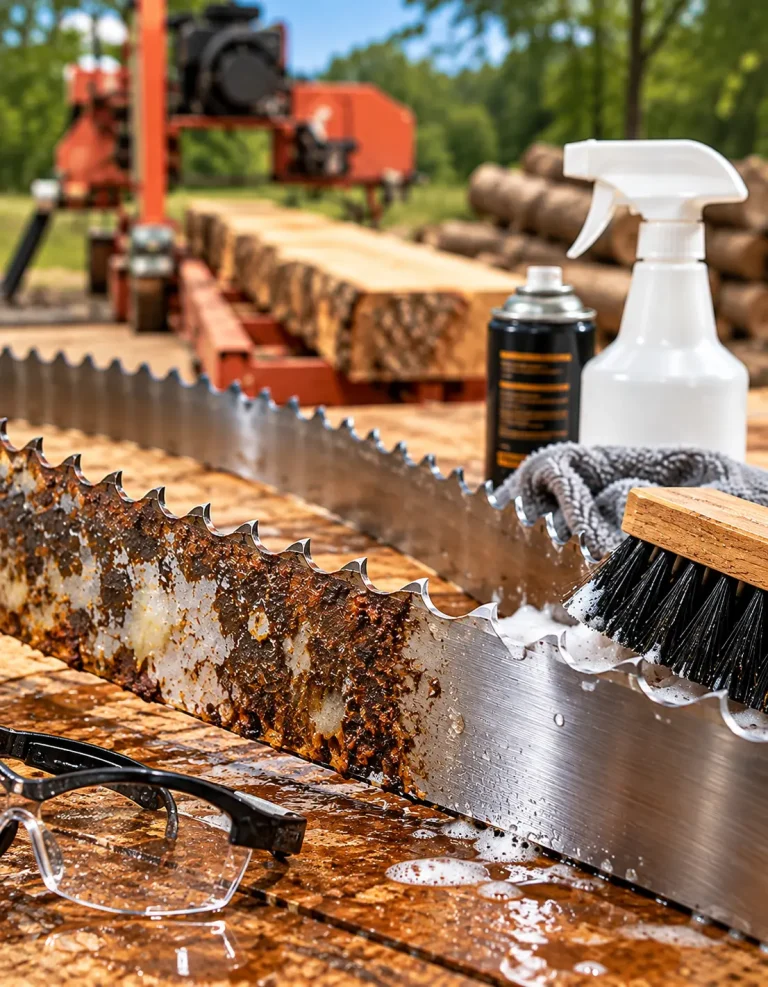
- Rust or corrosion
Not every blade can or should be saved forever.
Part of good blade maintenance is knowing when a sawmill blade needs sharpening and when it’s time to retire it.
Don’t Forget About Tooth Set
Sharpening is only part of the equation.
The set of a bandsaw blade refers to the way the teeth are positioned from side to side. That set creates clearance for the blade body as it moves though the wood.
If the tooth set isn’t right, even a sharp blade can have trouble cutting properly.
An incorrect or inconsistent set can contribute to:
- Blade wandering
- Wavy cuts
- Poor board thickness
- Excess friction
- Reduced blade performance
That’s why we sharpen and set sawmill blades at Cutting Edge Sawmill.
Both matter when you’re trying to get a blade cutting the way it should.
How Often Should You Sharpen a Sawmill Blade?
There’s no single number that works for every Sawyer.
Blade life between sharpening depends on things such as the species of wood you’re cutting, how dirty the logs are, blade quality, feed speed, and whether the blade encounters bark, dirt, rocks, nails, fencing or other debris.
Instead of relying entirely on a certain number of board feet or hours, pay attention to how the blade is cutting.
When performance starts dropping, it’s usually better to change the blade than continue pushing it.
A blade doesn’t have to be completely dull before you sharpen it.
In fact, regular sharpening can be much easier on your blades that running them until they barely cut.
A Sharp Blade Makes Sawmilling Easier
Sawmill blades take a beating.
They’re cutting through bark, knots, dirt and hundreds of feet of wood, so eventually every blade is going to need attention.
Learning to recognize the warning signs that your sawmill blade needs sharpening early can mean:
better lumber, straighter cuts, less strain on your equipment, and better performance from your blades.
And sometimes the difference between a frustrating day at the sawmill and a good one really is as simple as putting on a properly sharpened blade.
A sharp blade will perform better, but good day to day care matters too. Keeping blades clean, dry properly stored, and regularly inspected can help extend their life and prevent unnecessary damage. You can find more tips in our Blade Care and Maintenance guide.
Need Your Sawmill Blades Sharpened?
We provide professional sawmill blade sharpening and setting to help you get cleaner cuts, better performance, and more life from your blades.
View Blade Sharpening Service →