WHEN SHOULD I
RESHARPEN MY BLADE?
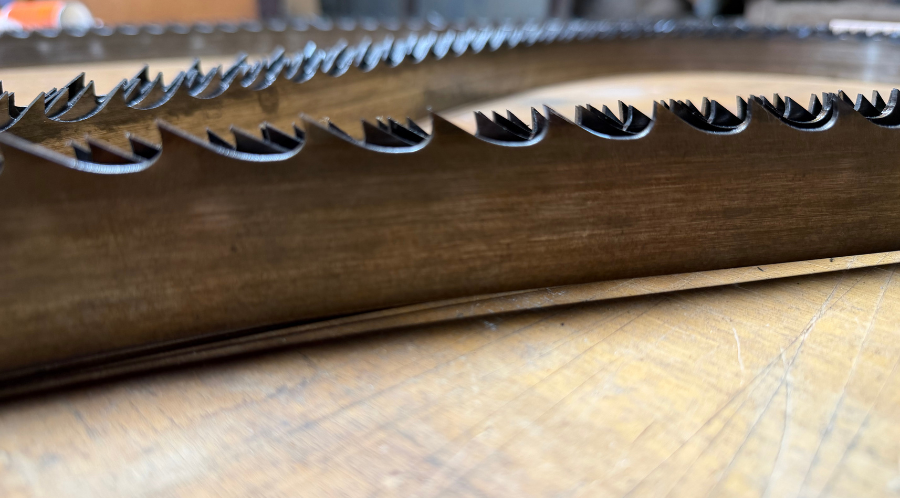
A sawmill blade usually gives you warning signs before it quits cutting well. Knowing
what to watch for can help you resharpen before poor cuts, extra mill strain, or blade
damage become a bigger problem.
DON’T WAIT UNTIL THE BLADE IS COMPLETELY DULL
A blade that is still cutting but showing early signs of wear is usually a better candidate for sharpening than one that has been pushed too far. Resharpening at the right time can help maintain cut quality and may extend blade life.
SIGNS YOUR BLADE MAY BE READY FOR SHARPENING
CUTS ARE GETTING SLOWER
If you notice it’s taking longer to make the same cut, your blade may be losing its edge.
THE BLADE STARTS WANDERING
The blade may not track as straight and can drift or wander during the cut.
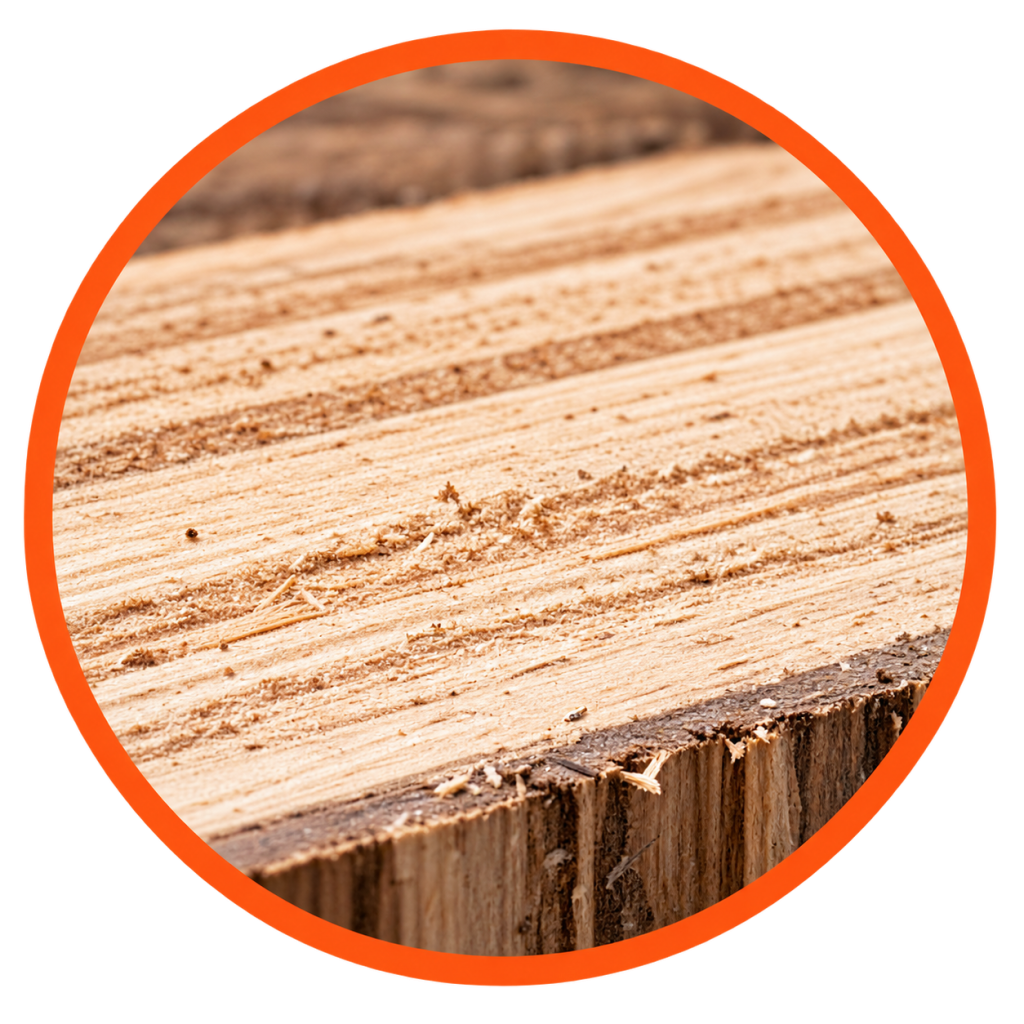
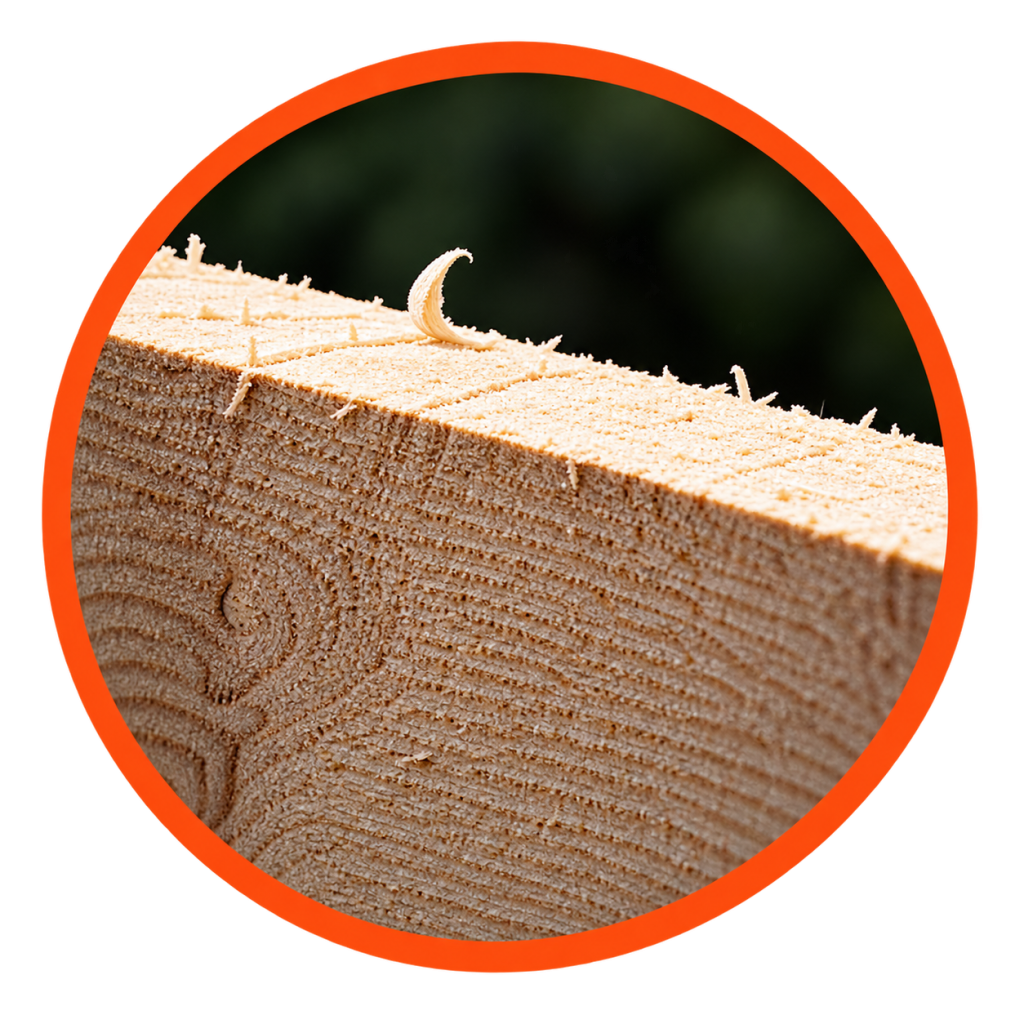
LUMBER SURFACES ARE ROUGHER THAN USUAL
A dull blade can leave a rougher finish, more sawdust, and more clean up.
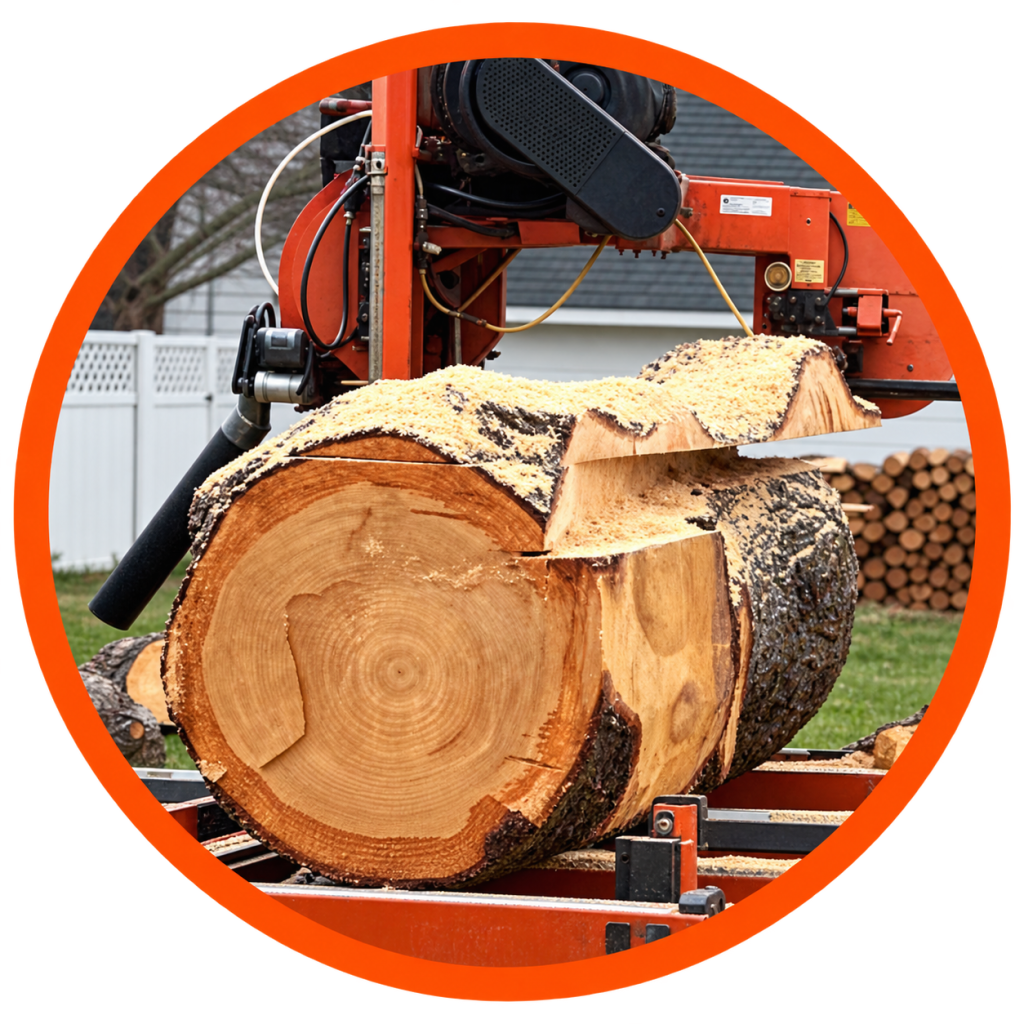
YOU HAVE TO PUSH THE FEED RATE HARDER
If you find yourself forcing the mill to maintain your normal feed rate, the blade may be dull.
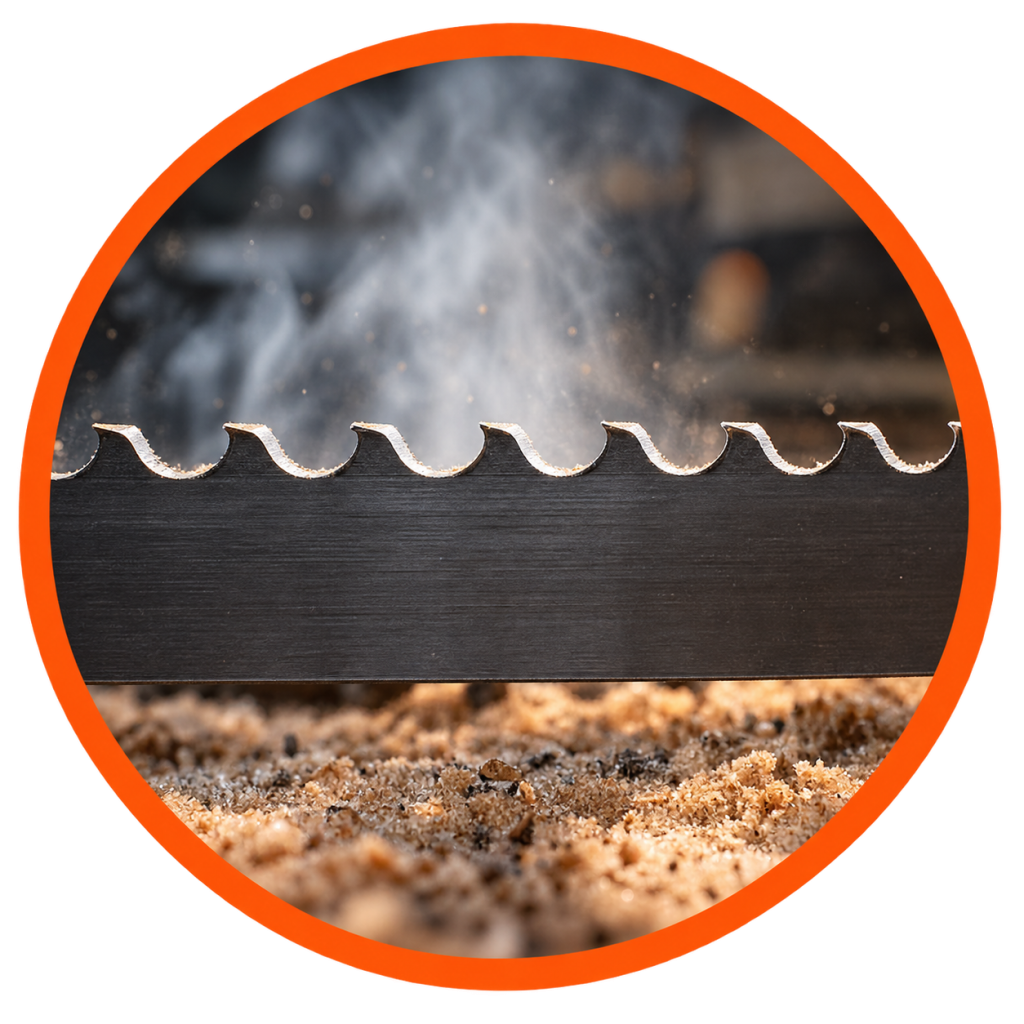
THE BLADE IS HEATING UP MORE THAN NORMAL
Extra heat and more smoke from the cut can be a sign the blade isn’t cutting efficiently.
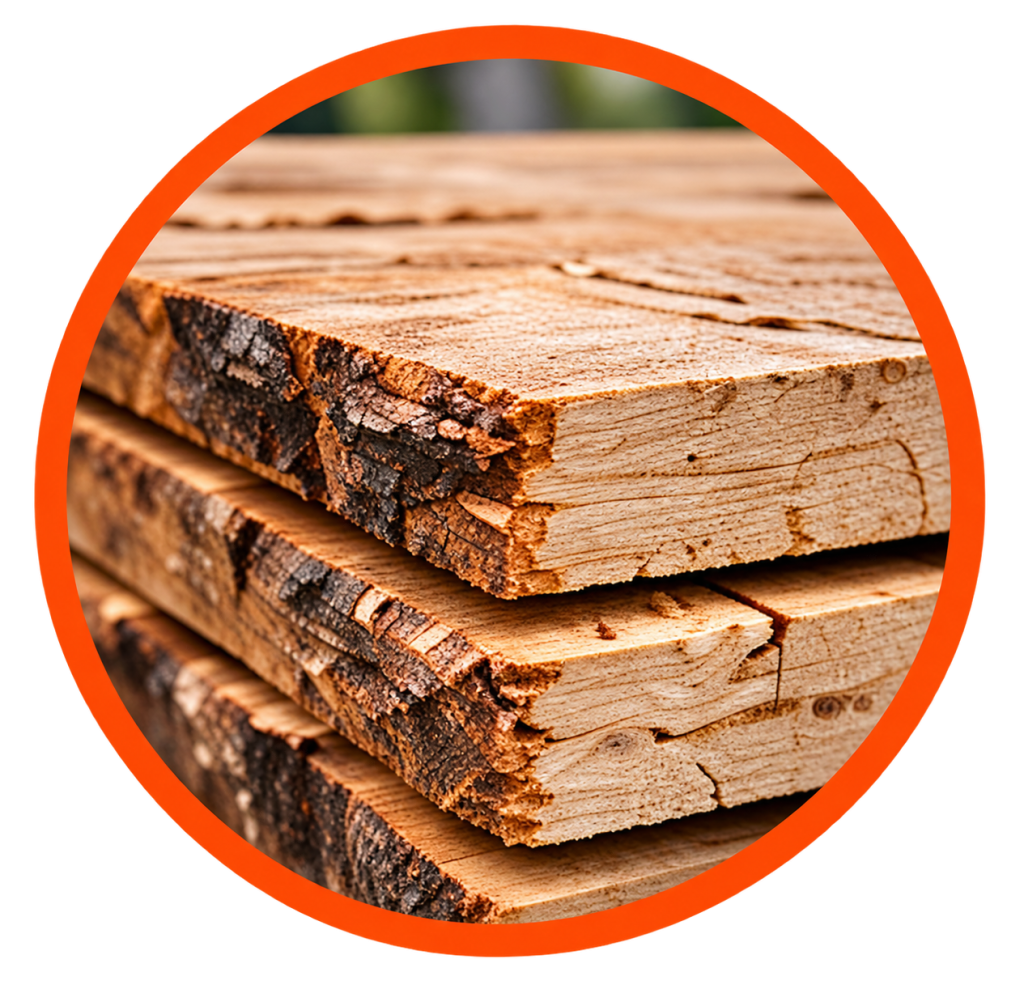
CUT QUALITY DROPS EVEN THOUGH MILL SET UP LOOKS CORRECT
If everything else checks out but the lumber quality isn’t like it used to be, it’s often a dull blade.
CHECK THESE THINGS BEFORE BLAMING THE BLADE
Not every cutting problem means the blade is dull. A setup issue can cause similar symptoms, so check the basics first.

BLADE TENSION
Make sure your blade is properly tensioned for your mill and blade size.

BLADE TRACKING
Check that the blade is tracking correctly on the wheels.

BLADE GUIDES
Inspect guides for wear and make sure they are adjusted properly.

FEED SPEED/LOG CONDITIONS
Very hard, dirty, or knotty logs can make a good blade cut slower and appear dull.

A SIMPLE RULE OF THUMB
If the blade is cutting noticeably slower, wandering more, or producing rougher lumber than it did when fresh – and your mill setup checks out – it’s probably time to rotate it out and have it sharpened.

WHEN TO STOP USING THE BLADE
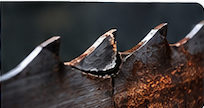
Take the blade out of service if you notice cracks, broken teeth, damaged welds, severe rust, or other visible damage. A damaged blade may not be a good candidate for sharpening and can create a safety risk.
READY TO GET YOUR BLADES CUTTING BETTER AGAIN?
Send your blades to Cutting Edge Sawmill for professional sharpening and setting.

PRINTABLE BLADE RESHARPENING CHECKLIST
Download a one-page checklist to help you decide when it’s time to rotate a blade out for sharpening.