
Scribner Log Scale Chart
Use the Scribner Log Scale chart to estimate the approximate board feet in a log based on its small-end diameter and length. The Scribner rule is commonly used for estimating lumber volume and gives sawyers another useful way to compare log yield before milling.
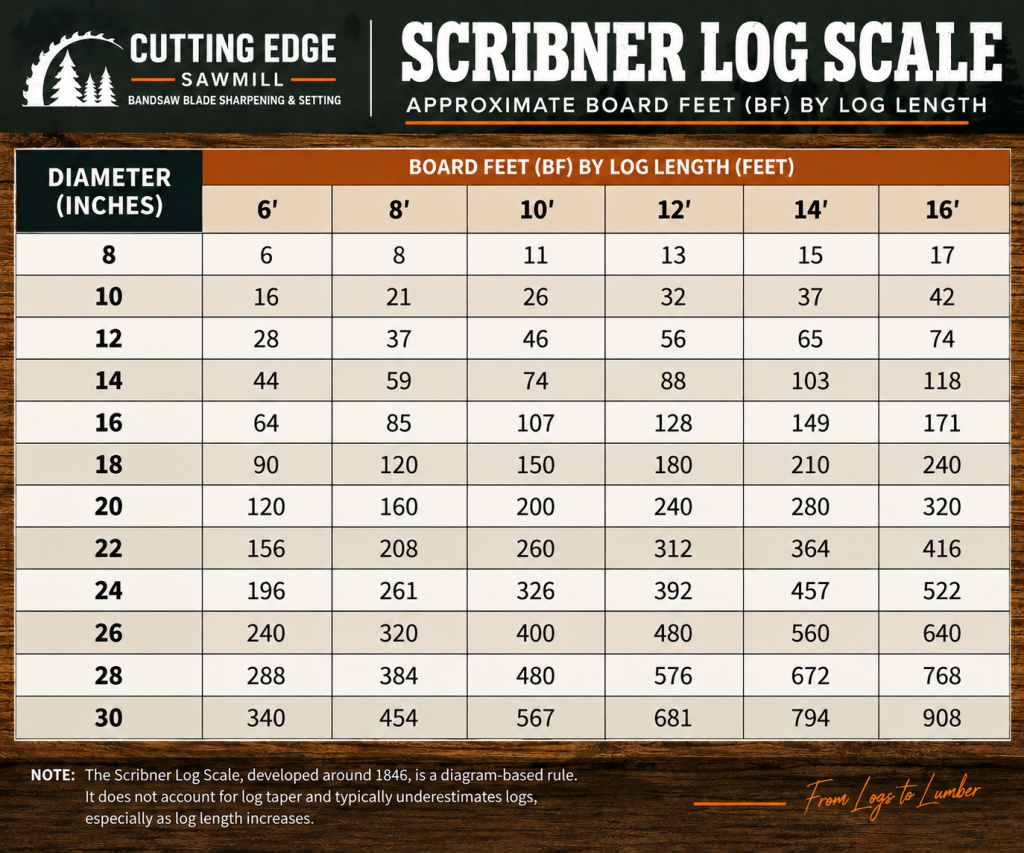
How to Use the Scribner Log Scale Chart
Measure the diameter of the log at the small end, inside the bark. Find that diameter on the chart, then follow across to the column for the log’s length. The number is the estimated board-foot volume for that log.
Log scale charts provide an estimate rather than an exact lumber yield. Actual recovery can vary based on log taper, defects, kerf, board dimensions, and how the log is sawn.
Scribner Log Rule
The Scribner rule estimates the amount of lumber that can be sawn from a log based primarily on the log’s small-end diameter and length. Because different Scribner tables and regional versions may use slightly different values, use the chart above as your reference when estimating board feet.