Why Is My Sawmill Leaving Washboard Marks?
Washboard marks can be frustrating. You’re making a good cut, the mill is running fine, and then you notice repeating ridges across the surface of your lumber. The good news is that washboard marks are common and usually have a straightforward cause. In this guide, we’ll walk through what washboarding looks like, why it happens, and the most effective ways to fix it.
Washboarding vs. Blade Wandering vs. Rough Cut
| Washboarding | Regular, evenly spaced ridges or waves across the board. |
|---|---|
| Blade Wandering | Irregular, wavy cut lines, often caused by guide or alignment issues. |
| Rough Cut | Generally uneven or fuzzy surface without consistent ridges, common with dull teeth or high feed rates. |
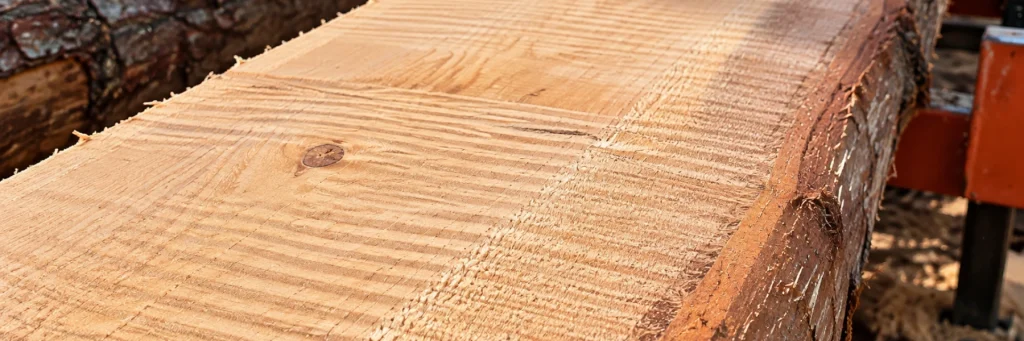
What Washboard Marks Look Like
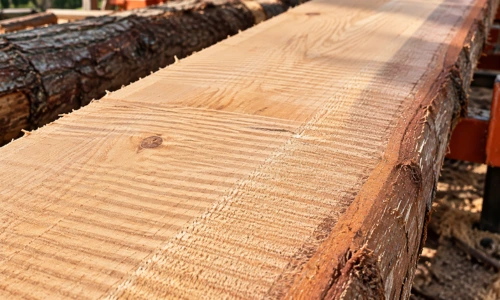
Washboarding appears as regular, evenly spaced ridges or waves across the face of the board, usually running perpendicular to the direction of feed. The surface feels like a washboard, high and low spots that repeat at a consistent spacing.
Blade Tension
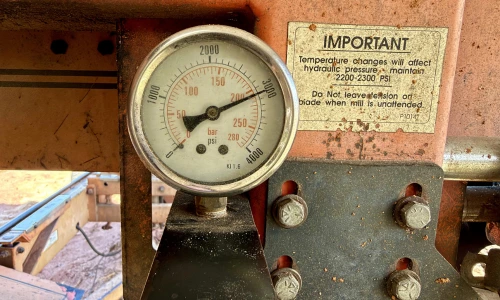
Insufficient blade tension is one of the most common causes of washboard marks. If the blade isn’t properly tensioned, it can vibrate between the guides, leaving repeating marks on the cut surface. Check your mill’s manual for the correct tension specification and verify it with a tension gauge when possible.

TIP: Make One Change at a Time
Adjust one thing, make a test cut, and compare the results. This helps you quickly identify what’s making the biggest difference.
Blade Guides and Alignment
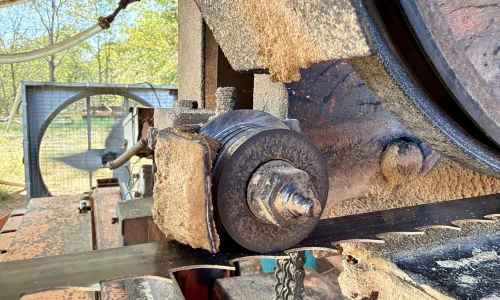
Worn guides, incorrect guide placement, or misalignment can allow the blade to move side to side during the cut. Make sure guides are in good condition, set to the correct clearance, and properly aligned to keep the blade stable.
Tooth Set
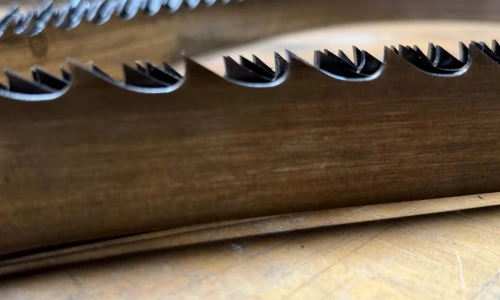
If the tooth set is too narrow or uneven, the blade can rub in the cut, creating heat and vibration that show up as washboard marks. A consistent, properly set tooth pattern helps the blade run freely and make a smoother cut.
Dull or Damaged Teeth
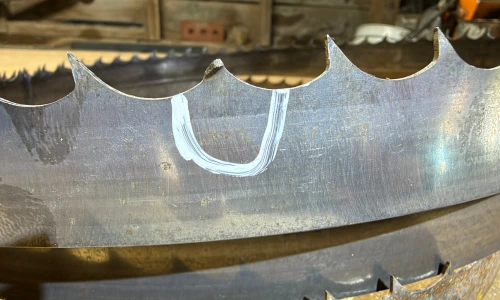
Dull, chipped, or uneven teeth won’t cut cleanly and can cause the blade to chatter, leaving washboard marks behind. Regular professional sharpening and inspection keep your blade cutting efficiently and producing a better surface finish.

KEEP YOUR BLADE CLEAN
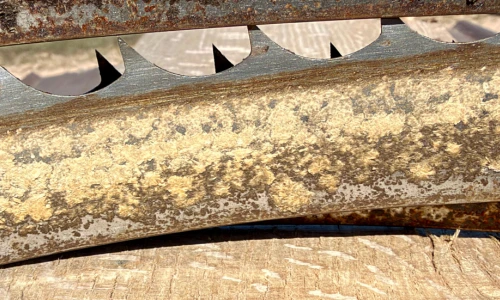
Pitch and sawdust buildup can cause vibration and poor cut quality. Clean your blade regularly, especially when cutting resinous woods.
Feed Rate
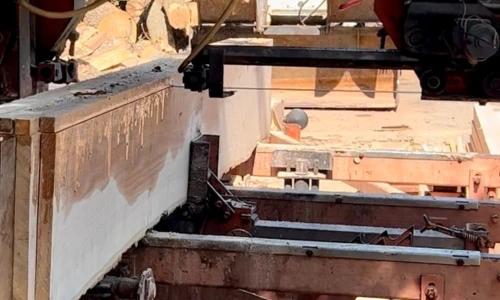
Feeding the mill too fast can overload the teeth and cause the blade to vibrate. Too slow of a feed rate can also contribute to heat buildup and a rough surface. Find a steady feed rate that matches your mill, blade, and the type of wood you’re cutting.
Pitch and Sawdust Buildup
Pitch and sawdust can build up on the blade, especially when cutting resinous woods like pine. Buildup on the gullets can upset the cut and lead to washboard marks. Keep your blade clean and consider using a pitch removal product if needed.
Wood Conditions
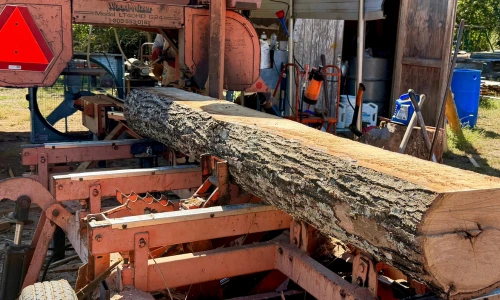
Certain wood characteristics can make washboarding more likely, including:
- Very hard or dense species
- Interlocked grain
- Knots or irregular grain
- Freezing, we, or dirty logs
Quick Troubleshooting Order
If you’re seeing washboard marks, check these items in order:
- Blade Tension
- Guides and Alignment
- Tooth Set
- Blade Condition (sharpness & damage)
5. Feed Rate
6. Pitch and Sawdust Buildup
7. Wood Conditions
8. Make one adjustment at a time and test a cut.
Need Your Sawmill Blades Sharpened?
We provide professional sawmill blade sharpening and setting to help you get cleaner cuts, better performance, and more life from your blades.
View Blade Sharpening Service →